
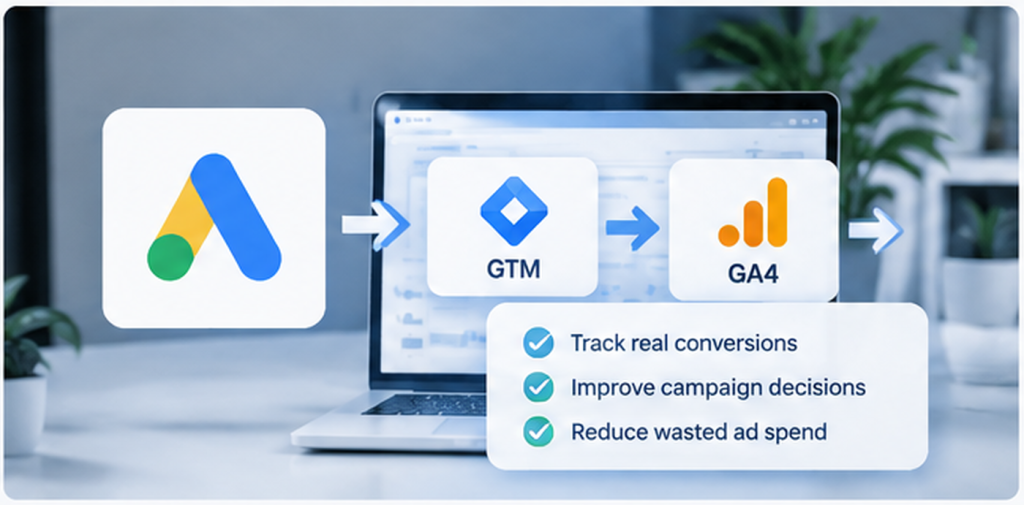
Accurate Google Ads conversion tracking starts with a clear measurement plan. Before adding tags, define the actions that represent real business value, such as qualified lead submissions, booked calls or completed purchases.
Choose the conversions that matter
Track outcomes that help you evaluate campaign performance rather than every interaction as a primary conversion. Keep micro-actions available for analysis, but separate them from the conversions used for bidding and reporting.
Build a reliable tracking path
Use a consistent data layer and Google Tag Manager implementation where appropriate, validate the conversion action settings in Google Ads, and confirm that the same business event is not being counted twice through overlapping implementations.
Validate before using the data
Test the complete user journey, confirm that the tag fires only when the intended action occurs, and compare platform reporting with your source-of-truth data. Reliable validation makes campaign decisions easier and reduces the risk of optimizing toward inaccurate signals.
Keep measurement maintainable
Document the conversion name, trigger, source and ownership. Review tracking after website, form, checkout or consent changes so measurement remains dependable as the site evolves.